- Feb 8, 2026
Tastytrade vs Thinkorswim: Real Trader's Guide to Picking Your Platform
- Pedro Branco
- 0 comments
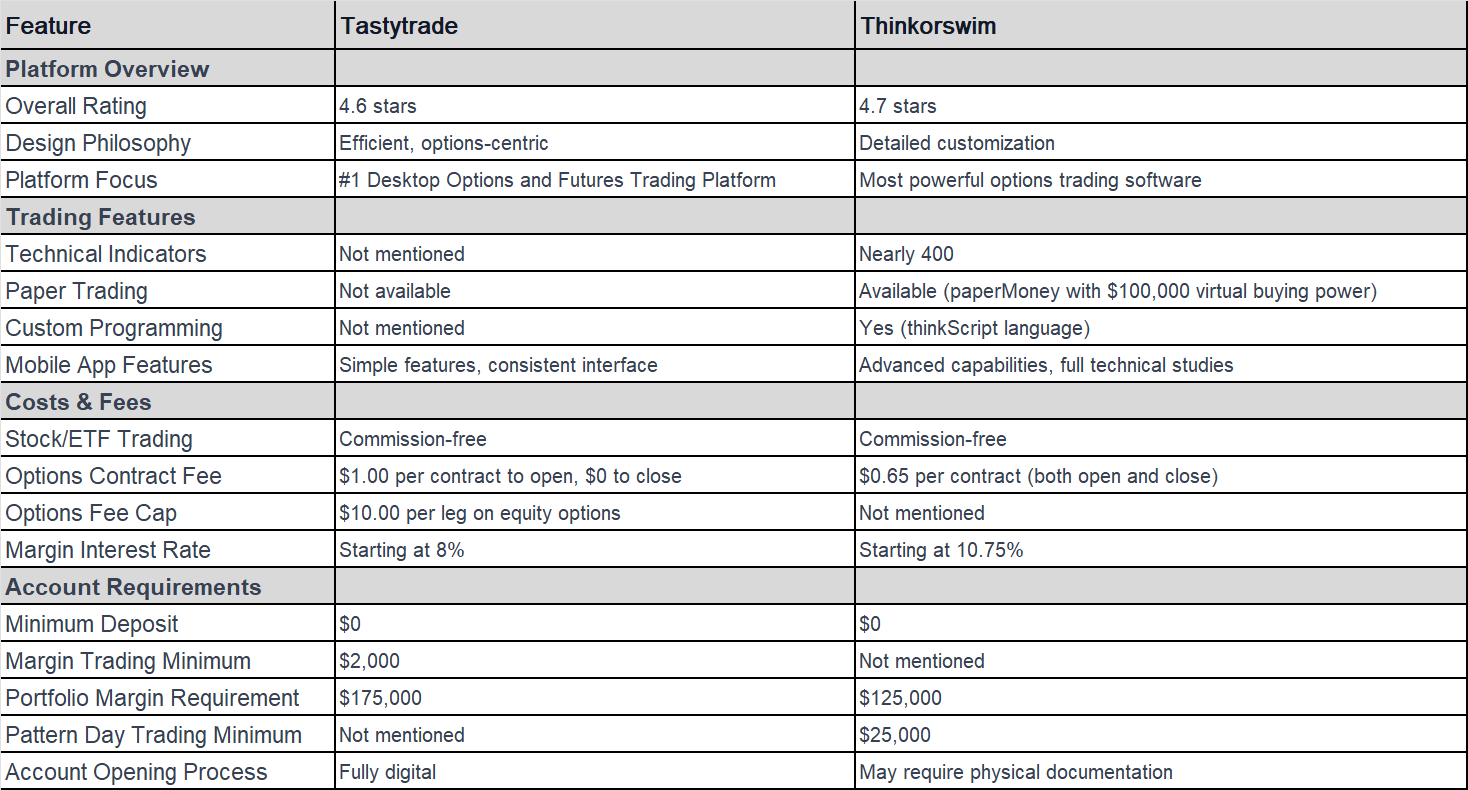
A comparison between tastytrade and thinkorswim reveals two top-rated trading platforms, scoring 4.6 and 4.7 stars, respectively. Active traders find that the choice between these powerhouses depends on their unique strengths and specializations.
Tastytrade (formerly tastyworks) serves options traders with a sophisticated platform that charges $1 per contract and offers free closing positions. TD Ameritrade's thinkorswim platform charges $0.65 per options contract and professionals call it the most powerful options trading software available. Both platforms let you trade stocks and ETFs commission-free. The platforms' margin interest rates differ substantially - tastytrade starts at 8% while thinkorswim begins at 10.75%.
This piece breaks down everything in these platforms to help you make an informed decision based on your trading style, priorities, and goals. The detailed comparison will give you a clear picture of which platform better fits your trading requirements.
Platform Focus and Design Philosophy
These platforms differ fundamentally in their core design approach. Tastytrade follows a streamlined, options-centric philosophy with a user-friendly platform built specifically for derivatives trading. The platform's design makes trading accessible without compromising depth, which helped it become the #1 Desktop Options and Futures Trading Platform. Traders can easily visualize positions thanks to its modern drag-and-drop interface.
Thinkorswim takes a different path with its complete customization approach. The platform, created by traders for traders, grows and adapts based on user feedback from in-app comments, platform analytics, and social media. Their desktop version stands as their flagship product and gives traders fully customizable software packed with elite-level tools for complex strategies.
Tastytrade's clean layout helps traders verify their approaches through backtesting features. The platform's curve analysis tools and active trader ladder show potential outcomes quickly. Thinkorswim provides a rich set of features including almost 400 technical indicators and its unique thinkScript programming language that lets users create custom algorithms.
Each platform embodies a distinct trading philosophy - Tastytrade emphasizes focused efficiency while Thinkorswim champions extensive customization. These core differences shape everything from interface design to feature implementation across desktop, web, and mobile versions.
Options Trading Tools and Features
These platforms stand out in options trading, each with their own unique approach. Tastytrade provides a straightforward yet powerful suite that improves derivatives trading efficiency. The platform has pre-built options strategies such as Long/Short Verticals, Calendars, Iron Condors, and Butterflies to streamline trade execution. On top of that, its Portfolio Risk Analysis tool offers immediate stress tests that let traders simulate "what if" scenarios for implied volatility shocks or price movements.
Thinkorswim takes analysis to another level with nearly 400 technical indicators and detailed Greeks analysis (Delta, Gamma, Theta, Vega). The platform's standout feature, paperMoney, provides a resilient simulation environment. Traders can practice with $100,000 of virtual buying power in equities, options, futures, and forex markets without risking real money.
The biggest difference lies in their practice environments. Tastytrade users need to fund a live account first since the platform lacks paper trading. Thinkorswim's paperMoney lets users define, test, and review strategies in markets of all types.
Mobile trading capabilities differ between the platforms. Thinkorswim's mobile version matches its desktop counterpart with identical technical studies. Tastytrade's mobile app keeps its accessible interface but doesn't include advanced features.
Fees, Commissions, and Account Requirements
Trading platform's value depends heavily on its fee structure, particularly for active traders. Both tastytrade and thinkorswim provide commission-free stock and ETF trading, and users don't pay any maintenance or inactivity fees.
The options pricing structure shows significant differences between platforms. A single contract round trip costs $1.00 with tastytrade, which charges $1.00 per contract to open positions and nothing to close them, with a $10.00 cap per leg on equity options. Thinkorswim users pay $0.65 per contract for both opening and closing transactions, bringing the total cost of a single contract round trip to $1.30.
These cost differences become more pronounced with multi-leg strategies:
10-lot vertical spread: $20.00 at tastytrade vs. $26.00 at thinkorswim
50-lot vertical spread: $20.00 at tastytrade vs. $260.00 at thinkorswim
Tastytrade offers more competitive margin rates starting at 8%, while thinkorswim's rates begin at 10.75%. Both platforms welcome traders without minimum deposit requirements. However, tastytrade requires $2,000 for margin trading and $175,000 for portfolio margin. Thinkorswim's requirements include $125,000 for portfolio margin and $25,000 for pattern day trading.
Traders can open tastytrade accounts completely online, while thinkorswim might need physical paperwork.
Comparison Table
Conclusion
Your trading style and priorities will determine whether tastytrade or thinkorswim is right for you. I've tested both platforms and found they each excel in different areas.
Tastytrade works best for dedicated options traders who want efficiency and economical solutions. Active traders can save money with the platform's $1 per contract fee structure and free closing positions, especially with multi-leg strategies. It also offers lower margin rates that start at 8%, which appeals to traders who utilize leverage. The user-friendly interface makes options trading efficient, but new traders won't find paper trading capabilities.
Thinkorswim excels at depth and customization. The platform charges slightly higher options fees at $0.65 per contract both ways but delivers powerful analytics with nearly 400 technical indicators and the flexible thinkScript language. Without doubt, new traders can develop strategies risk-free using its paperMoney feature before they commit real capital.
Tastytrade's capped fees could save you money if you're an active options trader executing multi-contract strategies. Thinkorswim might suit you better if you depend on technical analysis or need complete charting tools.
Both platforms give you commission-free stock and ETF trading with resilient mobile apps, though thinkorswim's mobile version has more advanced features. You'll find either platform is a big step up from simple brokerage offerings. The best choice depends on how well the platform's strengths match your trading approach rather than picking an absolute winner.
These platforms keep evolving with the markets. You should weigh these factors against your needs to make the right choice for your trading future.