
- Mar 15
Options Trading for Beginners: Step-by-Step Guide (2026)
- Pedro Branco
- Options Trading
- 0 comments
(Last updated: March 2026)
Key Takeaways:
Options trading is growing fast. Traders executed 12.2 billion options contracts in 2025, showing increasing interest in options strategies among retail traders.
Options are more complex than stocks. Successful options trading requires understanding price direction, timing, and magnitude of the move, not just whether a stock goes up or down.
Start with the fundamentals. Before attempting advanced strategies like Iron Condors or Butterflies, learn the basics: calls, puts, strike prices, expiration dates, and the options Greeks.
Expect a longer learning curve. Basic competency typically takes 1–2 years of consistent practice, while full proficiency can take several years depending on your dedication and study routine.
Paper trading is essential. Practicing with simulated trades helps you understand mechanics, strategies, and risk management without risking real capital.
The Greeks determine risk. Delta, Theta, Gamma, and Vega explain how option prices change with market movements, time decay, and volatility.
Risk management matters more than strategy. Limit positions to 3–5% of your portfolio and take profits when they are available.
Options offer flexibility. When traded properly, options allow defined risk, multiple strategies, and opportunities in different market conditions.
***
Want to learn options trading but don’t know where to start?
You’re not alone. Options trading can seem complex at first, with terms like Greeks, strike prices, and expiration dates. But once you understand how it works, it becomes one of the most flexible and powerful ways to trade the market.
In fact, traders executed over 12 billion options contracts in 2025, showing how fast this market is growing.
The problem? Most beginners either:
jump into advanced strategies too quickly
trade without understanding risk
or give up before they develop real skills
This guide will show you how to learn options trading step-by-step, from the basics to practical strategies you can use with confidence.
Options Trading for Beginners – Quick Start
Learn calls and puts first
Understand risk and reward
Start with simple strategies
Use paper trading before real money
Focus on risk management over profits
What you need to know before learning options trading
If you are reading this guide, it is because you want to learn options trading. But before you jump into calls and puts, you need to understand what separates options trading from buying stocks. The differences are not just technical details - they will determine whether you succeed or lose money.
How options differ from stock trading
When you buy a stock, you own a piece of a company. That share exists as long as the company operates. Options work completely differently. You are buying a contract that gives you the right to buy or sell a stock at a specific price before a certain date. You own nothing in the actual company.
Stock trading requires one decision: buy shares if you think the price will go up. Options trading forces you to make three decisions at once:
Which direction will the stock move
How far will it move
When will it happen
This is why options are called derivatives - their value comes from another asset's price. Each contract controls 100 shares of the underlying stock. You get more market exposure with less money upfront. A stock trading at $242.50 costs $24,250 for 100 shares, but a call option on those shares might cost only $630.
The complexity you will face
Options markets use four main measurements called the Greeks: Delta, Theta, Gamma, and Vega. These tell you how different factors affect your position's value. Stock traders never deal with this level of analysis and complexity.
Time works against options buyers, particularly. An option's price has two parts: intrinsic value (actual value based on stock price versus strike price) and extrinsic value (premium for time and volatility). The extrinsic part disappears as expiration approaches. You can be right about direction but still lose money if your timing is wrong.
Your background matters
Your experience level affects how quickly you will learn options. People with finance backgrounds or stock trading knowledge pick up options concepts faster. If you understand market behavior, technical analysis, and risk management, you have a head start.
New traders should expect to spend extra time building foundation knowledge before tackling options. Brokers know this. They screen potential options traders to check trading experience, risk understanding, and financial readiness. Based on your answers, they assign a trading level (usually 1 to 5, with 1 being lowest risk) that determines which strategies you can use.
Time commitment for learning options
You can learn basic concepts like calls, puts, strike prices, and expiration dates in a few weeks. The concepts themselves are not hard. The challenge comes when you apply this knowledge to real markets.
Getting good takes much longer. You need years to build confidence in strategies, emotional control under pressure, and solid risk management. Some traders become consistently profitable in two years, others need a decade. Those who study and practice one to two hours daily advance faster than occasional learners.
In fact, basic competency takes roughly five years of full-time professional trading. Most traders need at least 12 months to see decent results with a strategy, and that assumes focused effort on one or two approaches with regular trade reviews.
Options Trading Basics Every Beginner Must Know
You need to understand specific concepts before you can trade options successfully. These fundamentals determine whether you can assess risk properly and predict how your positions will behave when markets move.
How options contracts work
What exactly is an options contract? It grants you the right, but not the obligation, to buy or sell an asset at a preset price within a given period. Think of it like placing a deposit on a house - you're locking in a price without the obligation to complete the purchase.
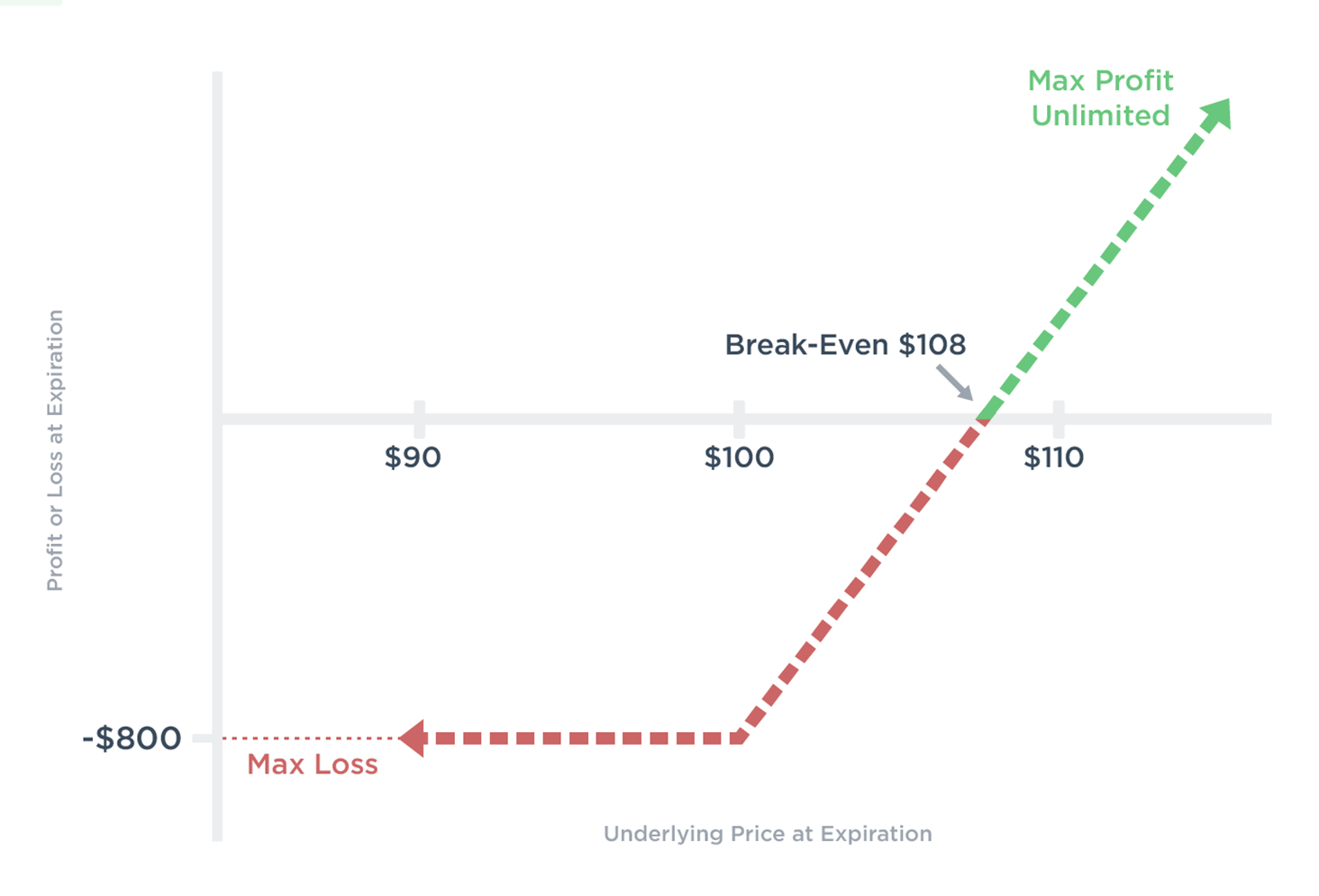
Two types exist: call options give you the right to buy an asset at a specific price, while put options give you the right to sell. Each contract specifies three critical terms: the strike price (the price at which you can buy or sell), the expiration date (your deadline to act), and the premium (your upfront payment for the contract).
Here's what you need to remember: a standard stock option contract covers 100 shares. So when you see an option priced at $3.00, you'll actually pay $300 for that contract ($3.00 × 100 shares).
Intrinsic value and extrinsic value
An option's premium consists of two components. Intrinsic value represents the profit from immediate exercise. For call options, calculate it as Market Price minus Strike Price. For puts, reverse the calculation: Strike Price minus Market Price. If the stock trades at $60.00 and your call has a $50.00 strike price, the intrinsic value equals $10.00.
Extrinsic value accounts for time and volatility. You calculate it by subtracting intrinsic value from the total premium. Time until expiration matters because more time provides greater opportunity for favorable price movement. Additionally, implied volatility reflects market expectations of price fluctuations, with higher volatility leading to higher extrinsic value.
Understanding options Greeks
The Greeks measure how different variables affect option prices. Does this sound complicated? It doesn't have to be once you understand what each one does.
Delta measures the change in option price from a $1.00 change in the underlying stock. Call options have Delta between 0 and 1, while puts range from 0 to -1. A 0.40 delta means your option gains approximately 40 cents when the stock rises $1.00.
Gamma tells you how quickly delta changes. Theta measures time decay, showing how much value your option loses daily. Vega indicates sensitivity to volatility changes, measuring price movement for each 1% volatility shift. Rho tracks interest rate impact, though this matters primarily for longer-term options.
Reading an options chain
An options chain displays available contracts in a tabular format. The display divides into two sides: calls on the left, puts on the right. Each row shows a strike price with corresponding bid price (what buyers will pay), ask price (what sellers accept), volume (contracts traded today), and open interest (total outstanding contracts).
Implied volatility indicates expected price fluctuations, directly affecting premiums. The Greeks appear for each strike, helping you assess risk before entering positions.
American vs European style options
American options can be exercised anytime before expiration, while European options only allow exercise on the expiration date. Most stocks and ETFs use American-style options, whereas broad-based equity indices like the S&P 500 (SPX) employ European options.
Best ways to learn options trading fast
You have several options for learning options trading. Your choice depends on how much time you can dedicate and whether you prefer structured guidance or going at your own pace.
Self-study with books and online resources
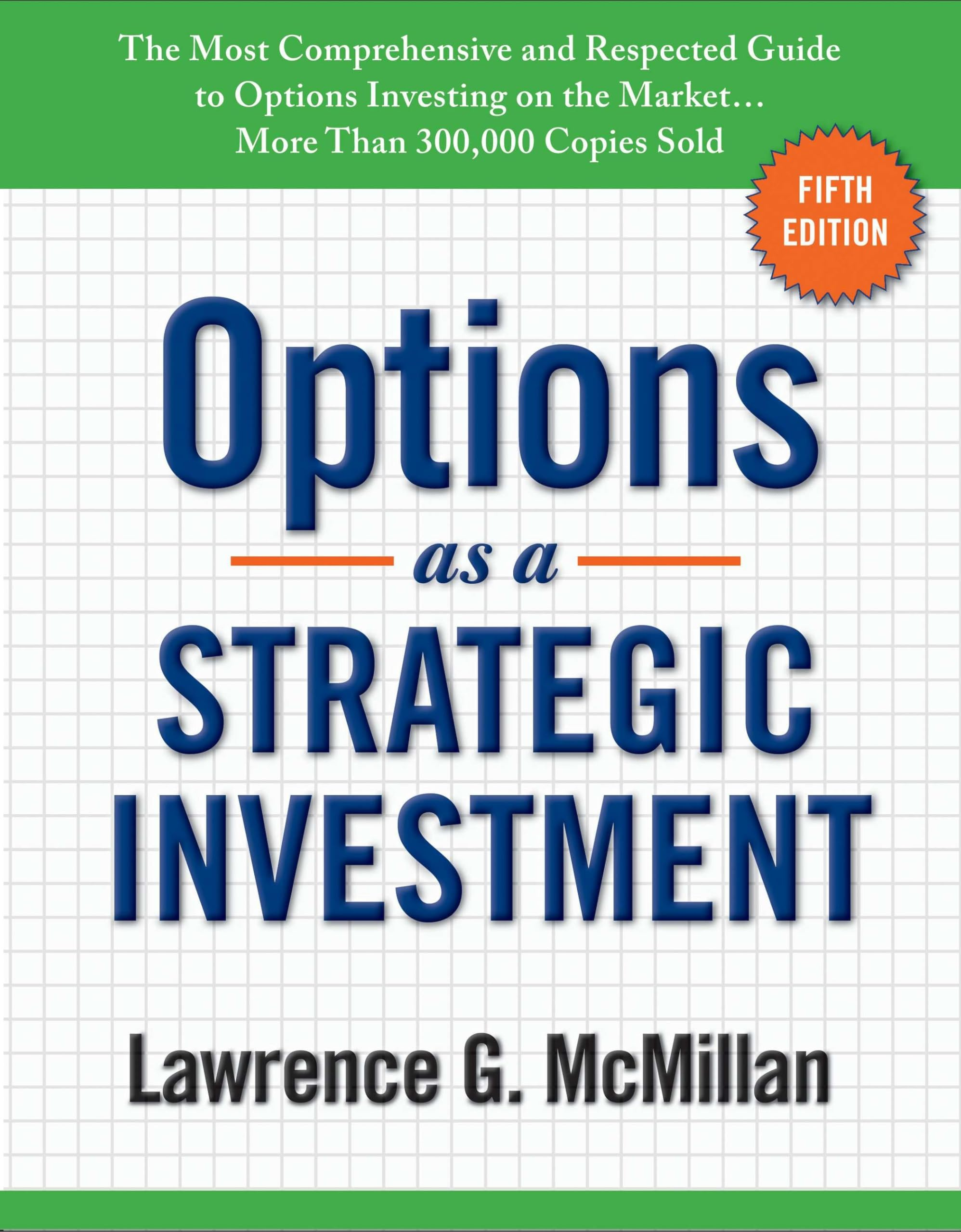
Books remain one of the most practical starting points. Lawrence McMillan's "Options as a Strategic Investment" provides strategies designed to minimize risk while maximizing profit potential. For understanding volatility's role in pricing, Sheldon Natenberg's "Option Volatility and Pricing" offers clear explanations with historical examples. Dan Passarelli's "Trading Options Greeks" explains how delta, theta, vega, and rho impact option values. I compiled a list of top trading books you can learn from.
For beginners seeking accessible material, Frank Richmond's "Options Trading Crash Course" targets those wanting to start trading quickly, though the content lacks the depth found in more detailed texts.
I made accessible a curated list of free links with valuable content you can learn from: 33 Blog Articles Every Trader Must Read
Options trading courses and coaching
Structured courses can speed up your learning curve. There are several online services that are great resources with different profiles. I posted a list of the top 5 options courses available with a comparison to speed up your decision.
Joining a trading community
Trading communities provide real-time advice during volatile periods and emotional support when trades go wrong. Additionally, these networks create opportunities for partnerships and mentorships. Check Myoptionsedge Trading Community for connections with experienced traders who exchange strategies and insights.
Learning from live trading examples
Watching professionals execute trades in real-time teaches you practical applications that go beyond theory. At myoptionsedge Trading Room we trade the markets and you are encouraged to question and learn from posted trades. Learning from practice will accelerate your learning curve.
Paper trading for practice
Paper trading lets you simulate real market conditions without risking capital. Charles Schwab's thinkorswim platform allows trading any supported market, including options, in a paper environment. Interactive Brokers offers simulations for serious beginners and experienced traders.
If you’re new, read this complete guide on how to paper trade options step-by-step:
Options Paper Trading for Beginners
Mentorship programs
One-on-one guidance can speed up skill development. My coaching sessions are available with personalized training tailored to your knowledge level. Does mentorship guarantee success? No, like any learning method, results depend on your dedication and practice. But it can help you avoid common mistakes and develop good habits faster than learning alone.
Building your Options Trading foundation in 5 Steps
You need to follow a logical progression when building your options foundation. I see too many beginners jumping directly into complex multi-leg strategies before mastering the basics. This leads to unnecessary losses and confusion.
Start with directional strategies
Directional trading means taking positions based on where you think an asset's price will move. Single-leg strategies using calls or puts provide the cleanest entry point. If you expect a stock to rise, buy call options. If you anticipate a decline, buy put options.
But here's what most beginners miss: deep in-the-money (DITM) options with delta between 90-95 offer significant advantages over far out-of-the-money contracts. These options move almost lockstep with their underlying stock and carry minimal extrinsic value.
Yes, DITM (Deep-In-The-Money) options cost more upfront, but they provide a much better edge than buying those cheap out-of-the-money options that frequently expire worthless. As I know from experience, chasing cheap options is one of the fastest ways to lose money in this business.
Learn vertical spreads first
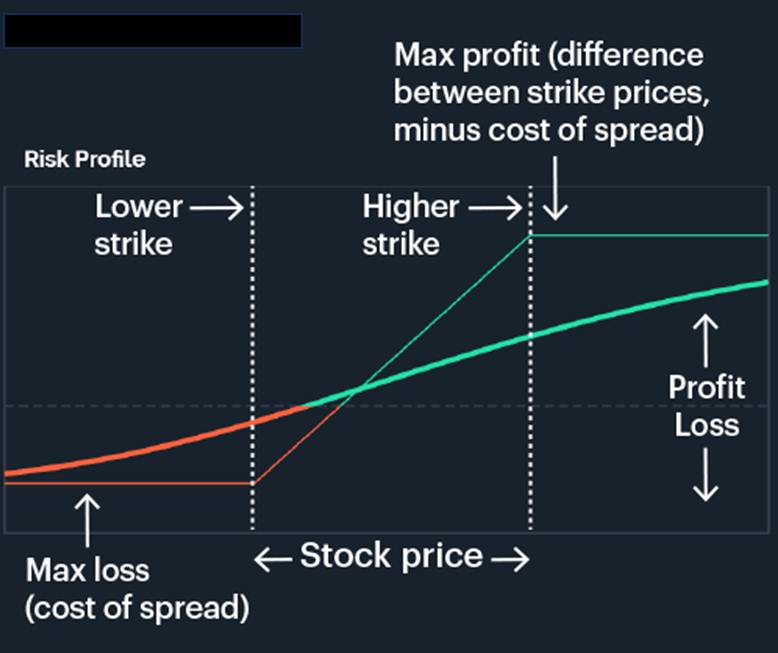
Once you understand single-leg options, vertical spreads become your next logical step. These involve buying and selling options of the same type with identical expiration dates but different strike prices. This structure creates defined risk and limited profit potential, making vertical spreads much safer than naked options.
Four primary types exist: bull call spreads and bull put spreads for bullish outlooks, bear call spreads and bear put spreads for bearish views. Bull call spreads result in net debit, while bull put spreads generate net credit. Additionally, bear put spreads require debit, whereas bear call spreads produce credit.
The maximum loss on debit spreads equals the premium you paid. For credit spreads, your risk equals the difference between strikes minus the credit received. This defined risk structure is why I recommend spreads over naked positions for developing traders.
Progress to income strategies
After you're comfortable with directional plays, income strategies offer ways to generate consistent returns. Covered calls involve selling call options against stock you already own. Cash-secured puts mean selling put options while maintaining enough cash to purchase the underlying stock if assigned. At myoptionsedge, we primarily trade income strategies such as the SPX Best and SPY Ride.
Both strategies work best in neutral to slightly trending markets. The premium collected provides additional income while managing risk. In fact, these strategies work even when you're slightly wrong about direction. Basically, you win by options' premium decay over time. These trades have a positive Theta. It means the options time decay will deliver the positive return of these trades.
Understanding risk management
Risk management preserves your capital during inevitable losses. Set a maximum percentage of your portfolio for any single trade - typically 3-5%. Position sizing determines how much capital you allocate to each trade. Diversification across different underlying assets and strategies reduces concentrated risk. But remember, we should always keep profits as they are presented. We should not be too greedy...
Choosing the right timeframes
The daily timeframe provides cleaner signals with less market noise. I hate 0DTE trading and buzz around it. Daily candles contain more volume and liquidity, producing more reliable levels and patterns. Once you're proficient with daily charts, the 4-hour timeframe offers additional trading opportunities while requiring tighter risk management.
Check myoptionsedge Trading Community for insights on timeframe selection from experienced traders managing multiple strategies simultaneously.
Mistakes you should avoid when learning options
If you are reading this post, you want to learn options trading without making the costly errors that trip up most beginners. The good news is that these mistakes are predictable and completely avoidable once you know what to look for.
Jumping into complex strategies too soon
You cannot master advanced multi-leg strategies without first understanding basic calls and puts. This sounds obvious, but I see traders attempt iron condors and butterflies when they still struggle with simple directional trades.
Doubling up on losing positions rarely works. Options behave differently from stocks, and adding to losing trades typically compounds your risk rather than lowering your cost basis. Additionally, avoid legging into spread trades one position at a time, which exposes you to unnecessary market risk between entries.
Start with single-leg strategies. Master them completely before moving to spreads.
Ignoring the Greeks
Here's a reality check: approximately 75% of options contracts expire worthless. Cheap options attract beginners because they seem like bargains, but contracts with minimal premium typically carry delta indicating 90% or higher probability of expiring worthless.
When you ignore delta, theta, and vega, you cannot accurately assess whether an option has realistic profit potential regardless of its low price. The Greeks tell you everything about how your position will behave under different market conditions.
Poor risk management
A University of California study discovered that over 75% of individual options traders lose money. The primary cause remains poor risk management.
Set loss caps defining when you'll exit losing positions. Take substantial profits when they are presented instead of chasing higher returns. We should not be too greedy... as I know from experience, markets can turn against you quickly.
Position sizing matters more than strategy selection. Risk only 1-5% of your portfolio on any single trade.
Not using paper trading
Paper trading allows practice without capital risk. The emotional responses to market movements become muted when trading virtual money, but this limitation beats losing real capital while learning mechanics and platform navigation.
Does paper trading perfectly replicate real trading emotions? No, but it teaches you the mechanics without the financial stress.
Trading without a plan
Trading plans establish entry and exit rules before emotions take over. Without predetermined strategies, you'll make impulsive decisions during market peaks and valleys.
Define your entry points, exit targets, and timeframes before opening any position. Write down your reasoning for each trade. This simple step prevents most emotional trading mistakes.
In fact, having a plan becomes even more important with options because time works against many strategies. You need to know exactly when to exit, both for profits and losses.
Conclusion
You now have a complete roadmap for learning options trading systematically. Start with the basics like calls and puts, progress to vertical spreads, and only then move toward advanced strategies. The journey takes time, typically years rather than months, but the flexibility and control options make that investment worthwhile.
All things considered, your success depends on consistent practice, proper risk management, and avoiding common beginner mistakes. Use paper trading to build confidence without risking capital. Most importantly, dedicate focused time daily to study and review your trades. Keep learning, stay patient, and your proficiency will develop sooner or later.
***
FAQs
Q1. What's the best way for a complete beginner to start learning options trading? Begin by opening a brokerage account that supports options trading and focus on understanding the fundamentals: calls (the right to buy) and puts (the right to sell). Start with paper trading to practice without risking real money, and dedicate time to learning basic concepts like strike prices, expiration dates, and how options contracts work before moving to live trading with small amounts.
Q2. How long does it typically take to become proficient at options trading? While you can grasp basic concepts like calls and puts within a few weeks, achieving proficiency takes considerably longer. Most traders need at least one to two years of consistent practice to see decent results, with some requiring up to five years to develop strong competency. Dedicating one to two hours daily to studying and practicing will accelerate your learning curve compared to occasional study.
Q3. Should I buy or sell options when starting out? For beginners, selling options like covered calls or cash-secured puts is often recommended over buying because time decay works in your favor. When selling, you can profit even if the stock moves slightly against you or stays neutral, whereas buying options requires you to be correct about direction, magnitude, and timing. However, start with whichever approach you understand best and keep positions small while learning.
Q4. What are the most common mistakes beginners make in options trading? The biggest mistakes include jumping into complex multi-leg strategies before mastering basic calls and puts, ignoring the Greeks (especially delta and theta), poor risk management, and trading without a predetermined plan. Additionally, many beginners skip paper trading and buy cheap out-of-the-money options that have a high probability of expiring worthless.
Q5. Do I need a mentor to learn options trading successfully? While a mentor can accelerate your learning, it's not absolutely necessary. Many successful traders are self-taught through books, online courses, YouTube channels, and trading communities. Free resources like Option Alpha's courses, educational content from brokerages like Fidelity, and communities where you can learn from experienced traders can provide valuable guidance without the cost of formal mentorship programs.